
Shaftless elevator pros and cons
Prós
Space-saving design: Can be installed in smaller areas with a minimum footprint of just 0.55 square meters, installation is more flexible.
Faster installation: No shaft construction is required, which can reduce installation time by 30%–50%.
Flexible door configurations: Supports 90° corner entrances, circular entrances, and through-door designs, suitable for different floor layouts.
Contras
Limited maintenance space: The compact design may require technicians with experience working in confined spaces.
The high temperatures operating or a compact layout may result in more frequent component replacements and generate some noise.
Compact installation space: In high-temperature environments, some components may require more frequent replacement, and may also result in slightly higher operating noise.
Limited capacity and speed: Shaftless elevators generally have lower load capacities and speeds making them more suitable for low-rise residential applications.
Shaftless Elevator Types
Shaftless elevators are available with different drive systems, the most common type including traction, screw-driven, pneumatic and hydraulic.
Traction Platform Lifts
Traction platform lifts use steel cables or belts driven by a traction machine to raise and lower the car.
Shaftless models typically use a self-supporting aluminum or steel enclosure instead of a conventional elevator shaft.

Screw-Driven Lifts
Screw-driven lifts use a motor and lead-screw mechanism to move the car vertically. They require minimal structural work, take up no extra space, and do not even require a separate pit.

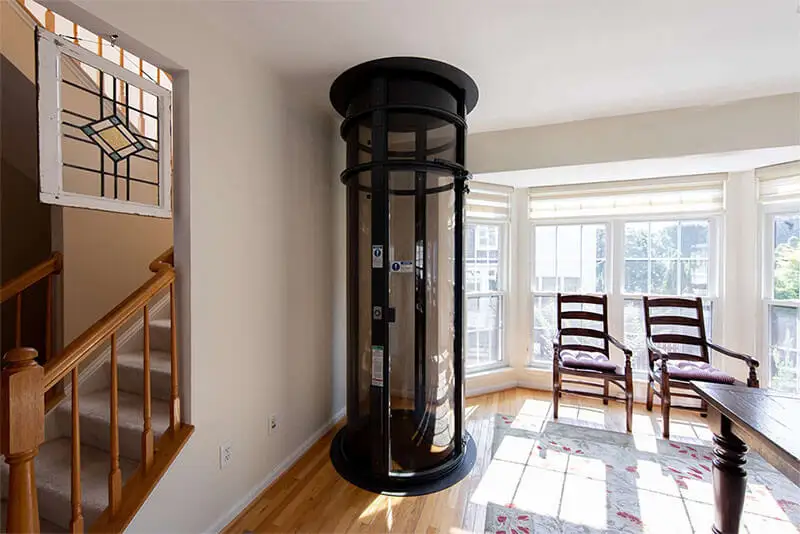
Pneumatic Vacuum Elevator (PVE) Features
Utilizes the principle of air pressure differentials to raise and lower the car within a transparent, cylindrical pneumatic tube, does not require a conventional elevator shaft, pit, or machine room; its cylindrical appearance exudes a high-tech aesthetic and occupies a very small footprint.
Hydraulic Lift
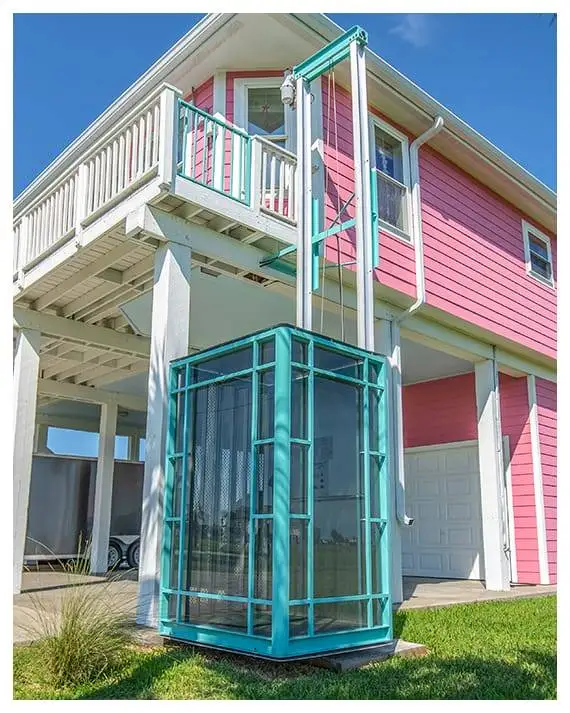
Hydraulic elevators are driven by hydraulic fluid and are used in low-rise buildings. While they are more cost-effective than other types of elevators, installation and maintenance expenses can add to long-term costs.
How to choose
Choose based on your available space, required travel height, load capacity, installation conditions, and preferred drive system.
- If you have a sufficient budget and space, and are looking for the comfort and smooth riding experience, we recommend a elevador de tração.
- If space is extremely limited and there is no pit, we recommend a screw elevator.
Screw elevators are suitable for retrofitting existing homes or for installation in compact spaces (less than 1 square meter). - If design and visual appeal are your main priority, we recommend a pneumatic elevator; the fully transparent exterior and noise-free operation of pneumatic elevators offer a truly unique experience.
- If your budget is limited, a hydraulic elevator may be an option.
However, they require hydraulic oil and regular maintenance, and potential oil leakage should be considered when choosing a system for a residential environment.
Finally, regardless of which elevator you choose, be sure to verify that the product has EN 81 certification and CE marking to ensure quality.